
When a red tide enters our waters, you will see a strange natural occurrence. If you’ve never seen this happening, you need to go to the beach after sunset at the next red tide. When the water is disturbed with your hand or you can watch the waves, the water lights up with a blue color. This is called bioluminescence, and there is an excellent reason why this is happening.
What exactly is a red tide? How does it occur?
Within the sediment of the seafloor, there are tiny organisms called dinoflagellates. These organisms are dormant and are waiting for the ideal conditions (nutrient-rich water, light, water temperature, and water salinity) to develop and grow. When they do start developing, it, in turn, causes the phytoplankton (tiny microscopic plants) to bloom.
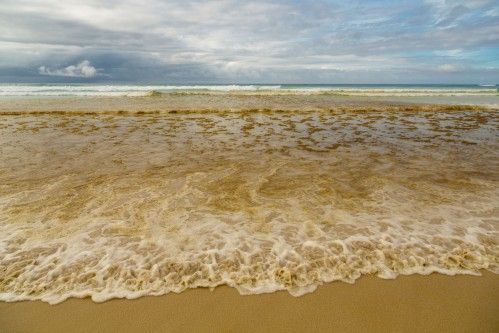
Red tide on the water surface being washed ashore.
Even though it may not seem like it, red tide is an overgrowth of phytoplankton near the ocean surface. This area near the water surface is rich in oxygen, and phytoplankton have the best opportunity to grow here. Along with water currents, there will also be an increase in wind blowing the water offshore and then concentrating the phytoplankton blooms in certain areas.
All of this can cause the water to turn a shade of brown, orange, red, or even purple.
What happens to the phytoplankton?
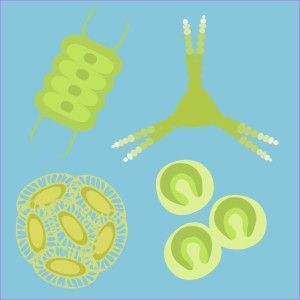
Phytoplankton are small organisms.
The phytoplankton eventually dies and then travels down to the sea bed where they are broken down by bacteria. Although a red tide can last for several weeks, the average lifespan of individual phytoplankton is rarely more than a couple of days.
Is red tide dangerous?
Red tide itself is not dangerous, but a natural occurrence. It is necessary for the production of plankton. It can, however, bring about negative or even dangerous results.
Harmful algal blooms are known to occur off the West Coast. This is a natural and seasonal phenomenon.
Some types of red tide can contribute to abalone and mussel (white and black) mortalities. Since mussels are filter feeders, they could ingest red tide organisms when filtering the ocean. The mussels themselves aren’t harmed when storing the phytoplankton. The problem is that these mussels can remain contaminated for up to four months and are poisonous when ingested by humans.
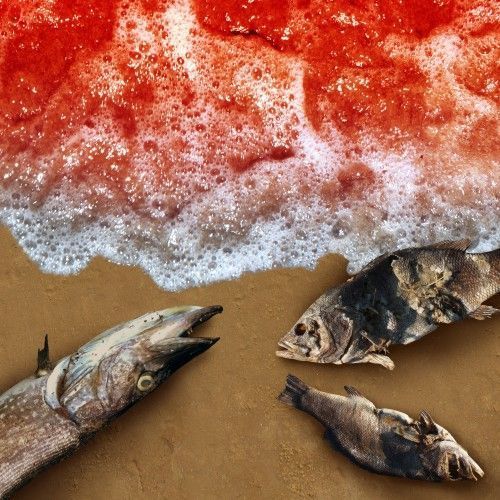
During a red tide, there is also an increase in the mortality rates of fish and rock lobsters. They end up dying due to oxygen depletion, either because their gills get clogged up or because of the lack of oxygen that results when bacteria break down the dead red tide organisms. During this process, aerobic bacteria deplete the oxygen levels and are then replaced by anaerobic bacteria.
Anaerobic bacteria convert sulphur into hydrogen sulphide gas (which is toxic). Hydrogen sulphide smells like rotten eggs, turns the water a deep shade of black, and poisons all the remaining organisms. This is known as a Black Tide Event.
Did you know? A Black Tide event killed 95% of the marine life in St Helena Bay in 1975.
What does the red tide have to do with bioluminescence in the water?
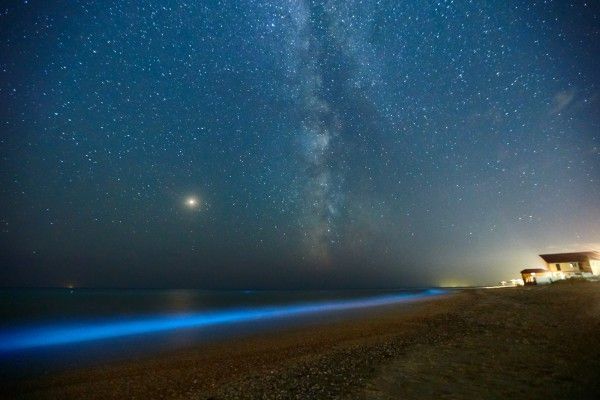
Here you can see the bioluminescence caused by the movement of the waves on the shoreline.
Bioluminescence is caused by the increase of dinoflagellates (red tide organisms) in the water. There is a chemical reaction occurring within these organisms that causes the emission of light. Left alone, these organisms will make very little light. Once there is a disturbance in the water, like a wave, a boat going through the water, or even when another animal tries to catch them, they will light up.
We Protect what we Love. Join the movement!

by Katia Theron
#Katia Theron #marine life #ocean #red tide